






About the organization
The Mixed Parliamentary Front for the Promotion of Mental Health is a cross-party group in the National Congress that brings together deputies and senators with the objective of strengthening, proposing, and monitoring public policies focused on mental health in Brazil. Its work involves facilitating debates among public authorities, specialists, and civil society, supporting the formulation of laws, overseeing the implementation of existing policies, and giving visibility to the issue on the legislative agenda. The front is the only one with a Public Legislative Agenda, seeking through its proposals to promote prevention, comprehensive care, and the guarantee of rights for people with psychological conditions, considering aspects such as access to services, combating stigma, and integration with areas such as education, social assistance, and employment.
Socioeconomic context
The initiative responds to a scenario of low coverage and fragmentation of psychosocial care, particularly regarding children and adolescents. Despite advances in structuring the Psychosocial Care Network (RAPS) since 2011, gaps persist regarding reception, continuity of care, and intersectoral coordination. This situation is aggravated by structural barriers in the network, such as the insufficiency and unequal distribution of Child and Adolescent Psychosocial Care Centers (CAPSi) and the need for improved reception and listening, in addition to limitations in intersectoral coordination and adolescents’ and young people’s access to services (UNICEF, 2022).
At the territorial level, although the School Health Program is widely disseminated, its formal adoption does not automatically translate into structured actions, especially in the mental health agenda, which depends on strengthened multidisciplinary teams. National monitoring of the implementation of Law No. 14,819/2024 (Policy for Psychosocial Care in School Communities) highlights this challenge; among the 18 states that reported on its implementation, heterogeneity of initiatives is observed within the states themselves, with absence of formal protocols and fragility in intersectoral coordination.
This scenario becomes more complex in light of recent social transformations that directly impact the well-being of children, adolescents, and young people, such as the intensive and poorly regulated use of digital platforms, associated with anxiety, body image distortions, isolation, and other conditions, an issue already recognized in the Digital ECA (Law No. 15,211/2025), in addition to stigma and the unpreparedness of services to address the specificities of youth (WHO; UNICEF, 2024). Added to this is the debate on early identification and judicialization of autism, often aggravated by misinformation regarding treatments.
In this context, the Front seeks to improve policy proposals, monitor proper implementation, and produce knowledge for evidence-based discussions, with an intersectoral and participatory perspective.

FPSM – Legislative Training on ASD – Photo: Arthur Menescal

FPSM – Legislative Training on ASD – Photo: Arthur Menescal

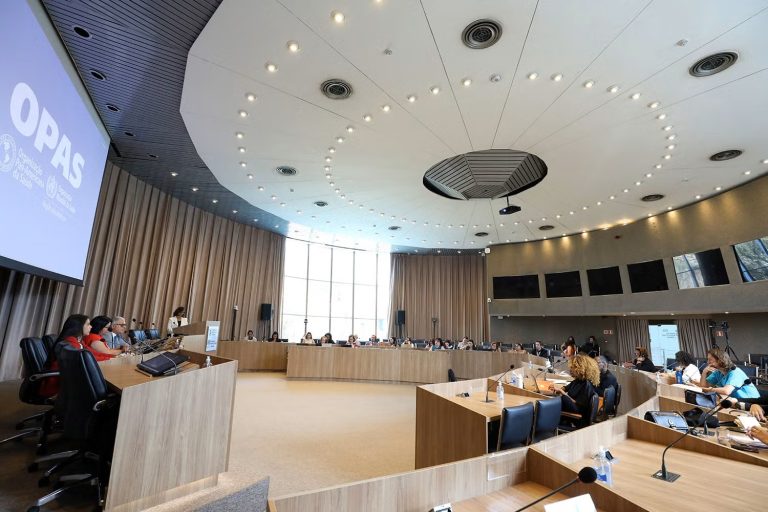
FPSM – Roundtable | Youth Mental Health – Photo: Arthur Menescal
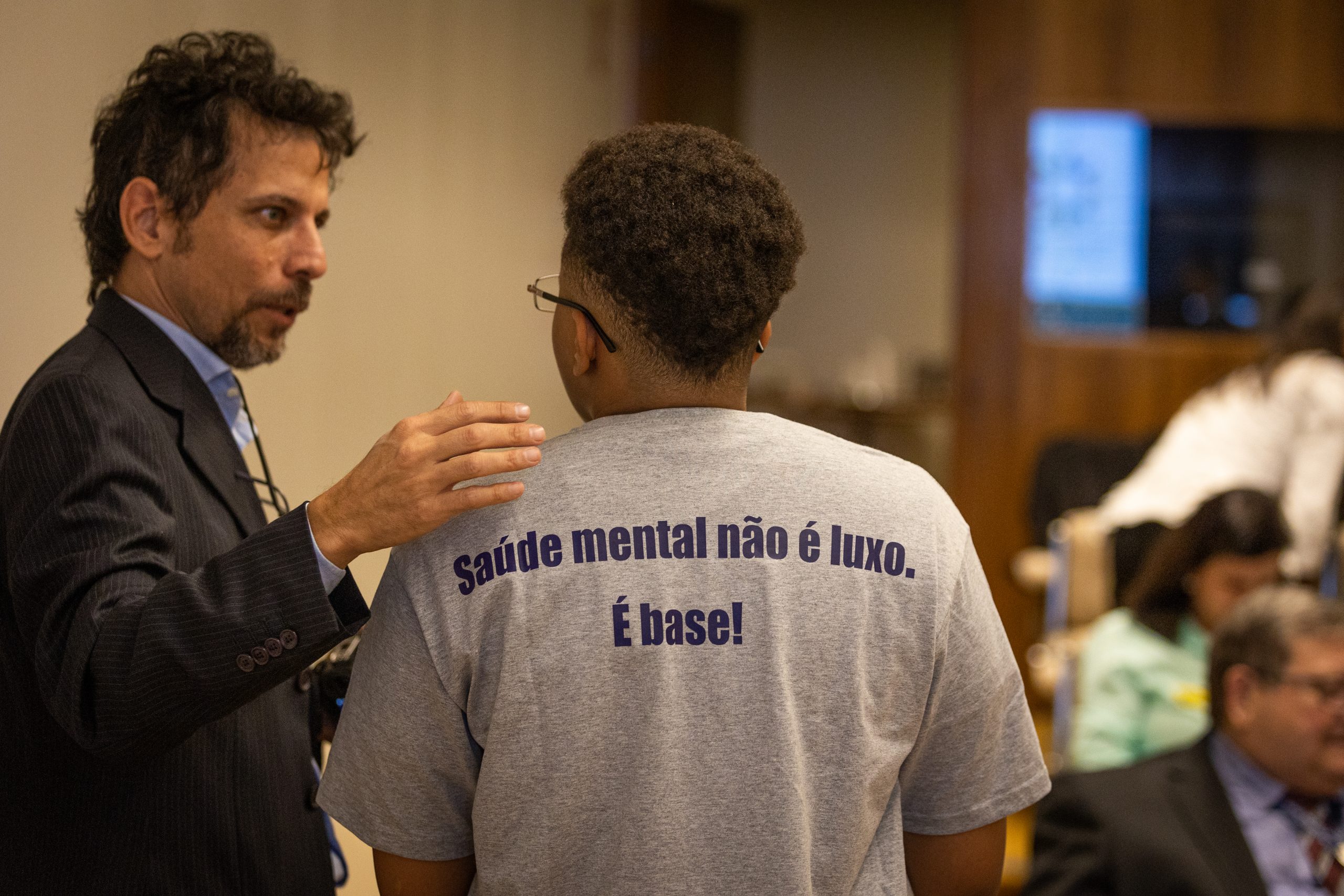
FPSM – Roundtable | Youth Mental Health – Photo: Arthur Menescal

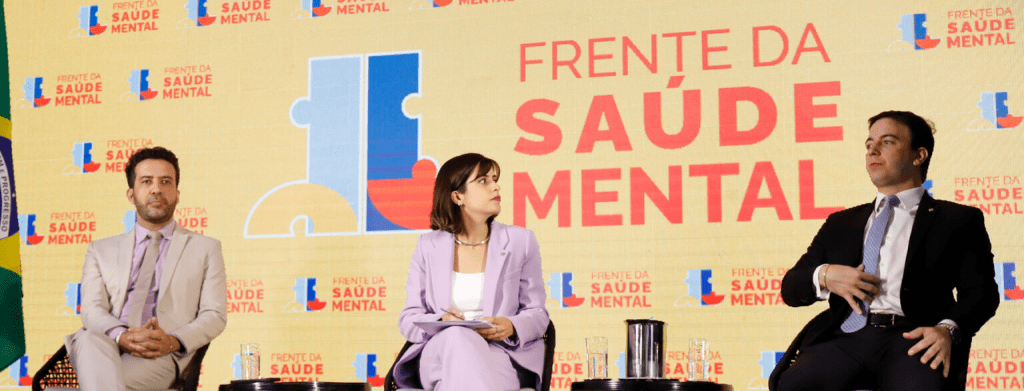
FPSM – Legislative Agenda Launch – Photo: IEPS Archive
Project objective
The project’s general objective is to strengthen the promotion of mental health through the improvement of legislative action, monitoring the implementation of public policies, and the production and dissemination of evidence to support intersectoral decisions, focusing on coordination among health, education, and social protection. For the 2025/2026 cycle, the following actions are highlighted:
-
01
Improve legislative formulation through the production of technical notes, resources, and recommendations on priority topics (mental health in schools, regulation of digital environments, suicide prevention, and strengthening of child and adolescent RAPS); <br />
-
02
Monitor the implementation of specific public policies, focusing on Law No. 14,819/2024 (psychosocial care in school communities) and the execution of the School Health Program (PSE), analyzing the presence of protocols, teams, and intersectoral coordination in the territories;
-
03
Produce applied evidence, including monitoring reports, territorial diagnostics, and analyses on access, reception, and continuity of mental health care for children, adolescents, and young people;
-
04
Strengthen coordination among health, education, and social protection, promoting dialogue with managers, specialists, and young people, in addition to supporting connections among federal, state, and municipal levels;
-
05
Expand political advocacy through events, support for parliamentarians, production of strategic content, and dissemination of evidence to improve public and legislative debate;
-
06
Support the national legislative agenda, contributing to the prioritization of bills, alignment with state parliamentary fronts, and strengthening of mental health as a state policy.
Partners
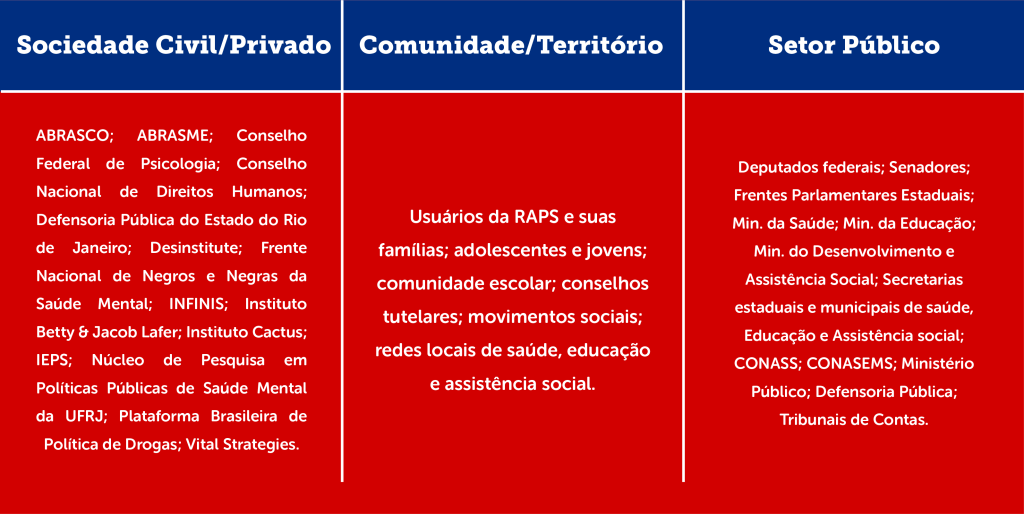
Dialogue with Public Policies
The Mixed Parliamentary Front for the Promotion of Mental Health (FPSM) operates in direct and continuous dialogue with public policies by coordinating the National Congress, the Executive, and civil society in the formulation, approval, and monitoring of legislative initiatives in mental health. This dialogue is particularly materialized in the construction and implementation of the Mental Health Legislative Agenda and in actions such as the national monitoring of Law No. 14,819/2024, which establishes the National Policy for Psychosocial Care in School Communities. The approval of this law, originating from Bill No. 3,383/2021, was one of the central goals of the FPSM’s agenda, demonstrating its capacity for advocacy to transform social demands into concrete public policies, in addition to currently monitoring its regulation and implementation in states and municipalities.
At the same time, the FPSM works to improve legislative debate in the face of contemporary challenges, such as the growing pathologization of life and the expansion of diagnoses, which have a direct impact on the production of laws and the design of public policies. Analysis of legislative production shows a significant increase in mental health proposals, many of them anchored in diagnostic categories (e.g., ASD), which requires care to avoid individualizing approaches and ensure evidence-based policies and rights guaranteed by the SUS. In this context, the Front also addresses emerging issues, such as the protection of children and adolescents in the digital environment—including debates related to the Child and Adolescent Statute (ECA) regarding platforms that encourage self-diagnosis, and continues as a future objective to strengthen integration among health, education, and social assistance, expand policy implementation in schools, and improve legislative production so that it responds to the real needs of the population, based on evidence and social participation.