





About the organization
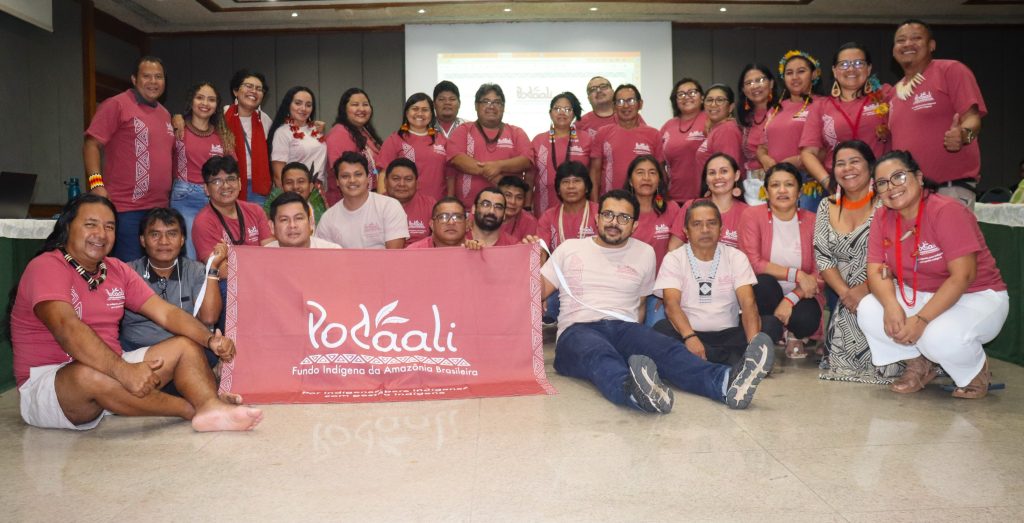
Podáali – Indigenous Fund of the Brazilian Amazon is a technical mechanism created by indigenous people, for indigenous people, and with indigenous management, resulting from the articulation of the Amazonian indigenous movement through COIAB – Coordination of Indigenous Organizations of the Brazilian Amazon. Its work stems from the objective of directly supporting the initiatives of indigenous peoples, respecting their own forms of organization, their ancestral knowledge, and their autonomy. The Fund works to strengthen self-determination, defense of territorial rights, cultures, and ways of life of indigenous peoples, promoting autonomous and sustainable management of territories and natural resources for the common good.
Socioeconomic context
The socioeconomic context of the indigenous population in the Legal Amazon is marked by persistent structural inequalities. The 2022 Census records approximately 1.69 million indigenous people in Brazil, belonging to 391 peoples and speaking 295 languages, with 51.2% concentrated in the Legal Amazon. Despite this diversity, IBGE indicators show that the indigenous population has higher poverty rates, less access to formal education, and precarious basic sanitation, factors that directly impact health and development conditions, especially for children and adolescents (IBGE, 2022).
In the Legal Amazon, these inequalities are intensified by geographic barriers and increasing pressure on territories, such as deforestation, illegal mining, and land conflicts. This scenario aggravates existing vulnerabilities; indigenous children have higher rates of malnutrition and food insecurity (UNICEF, 2021; Fiocruz, 2022), and recent studies indicate an increase in psychological distress among indigenous youth, associated with violence, forced displacement, and disruption of ways of life. Greater exposure to risk factors already demonstrates consequences for the mental health of adolescents and young people, as suicide rates for indigenous people are up to 2.7 times higher than the national average (The Lancet Regional Health – Americas 2023).
In this context, organizations led by indigenous women play a central role, as they are articulators of care networks, community sustainers, acting as political leaders and guardians of ancestral knowledge. Even while facing gender, race, and territorial inequalities, their work is strategic in promoting health and protecting children and adolescents.
Project objective
To strengthen the action, governance, and leadership of indigenous women in the Brazilian Amazon, contributing to addressing the structural inequalities that have historically affected them and to valuing their knowledge, practices, and own forms of organization. The initiative takes shape through a public call aimed at direct support to indigenous women’s organizations, recognizing their central role in defending lives, territories, culture, and indigenous sciences.
The proposal is a partnership between Podáali and the Union of Indigenous Women of the Brazilian Amazon – UMIAB and the Coordination of Indigenous Organizations of the Brazilian Amazon – COIAB and seeks to support initiatives in the nine states of the Legal Amazon, focusing on strategic areas such as organizational strengthening and rights promotion, sustainable economy and food sovereignty, and indigenous health, with emphasis on ancestral medicine, mental health, and care for children. In total, 43 proposals were selected. In addition to providing resources to strengthen actions, the partnership aims to strengthen institutional and management capacities, contribute to the leadership of indigenous women in the territories, and expand their participation in decision-making processes, territorial protection, and building sustainable futures.
Partners
| Civil society/Private | Community/territory | International |
| Funders: INFINIS Instituto Ibirapitanga | Implementer: Podáali and UMIAB | Funders: Nia Tero Foundation, Ford Foundation, Co-Impact Philanthropic Funds, and Synchronicity Earth |
Dialogue with public policies
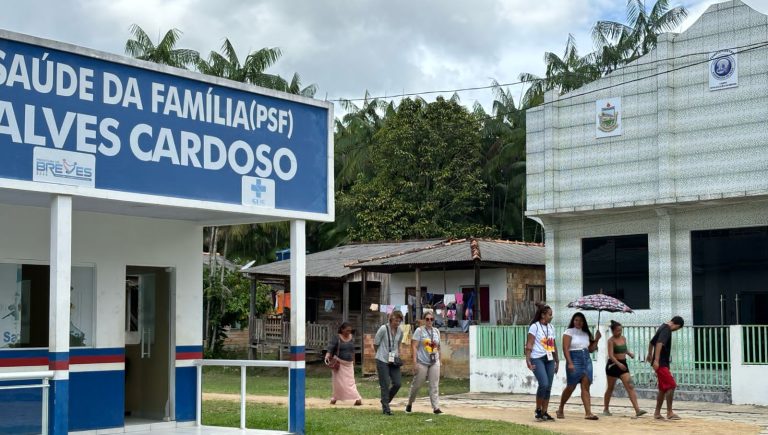
The partnership provides for dialogue with both public policies and public authorities by supporting initiatives for participation and political advocacy in decision-making and social control spaces, as well as coordination actions with collectives and indigenous health agents in communities, promoting local care networks.