





About the organization
Infinis, the philanthropy and advocacy front of the José Luiz Setúbal Foundation, works to defend the health of children and adolescents and strengthen civil society in Brazil. Guided by a commitment to a healthy, equitable, and holistic childhood, the organization combines evidence-based policy advocacy grounded in scientific evidence, support for projects and programs, intersectoral coordination, and strengthening the philanthropic field. At the territorial level, this work takes shape in initiatives such as naturalized playgrounds, aimed at improving environments that foster full child development, with special attention to contexts of greater social vulnerability, community participation, children’s leadership, contact with nature, and the development of sustainable responses for local territories.
Socioeconomic context
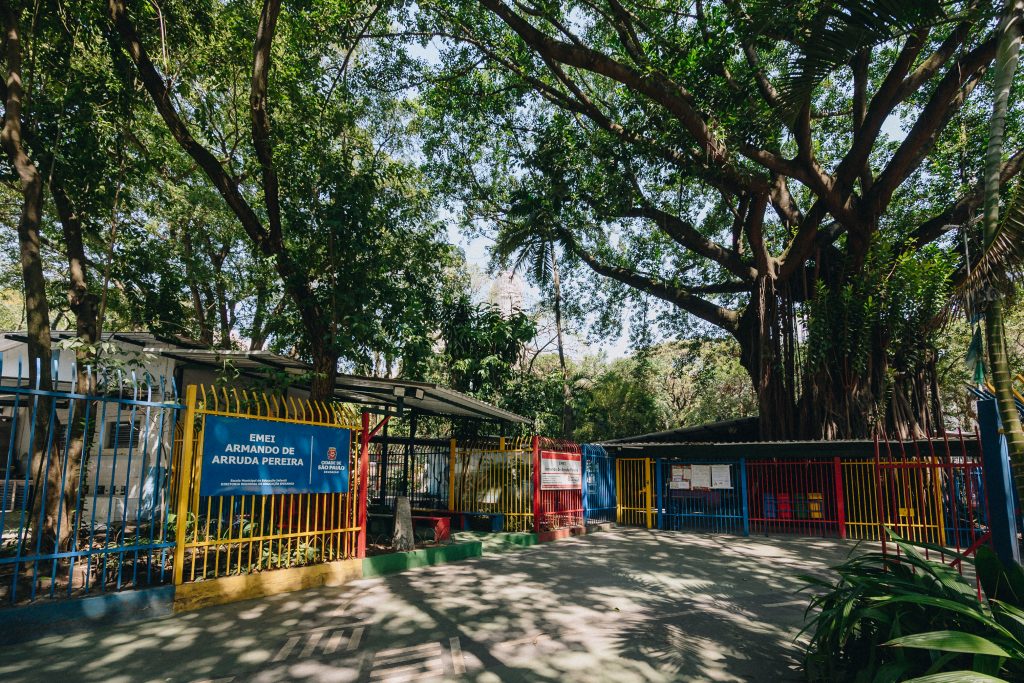
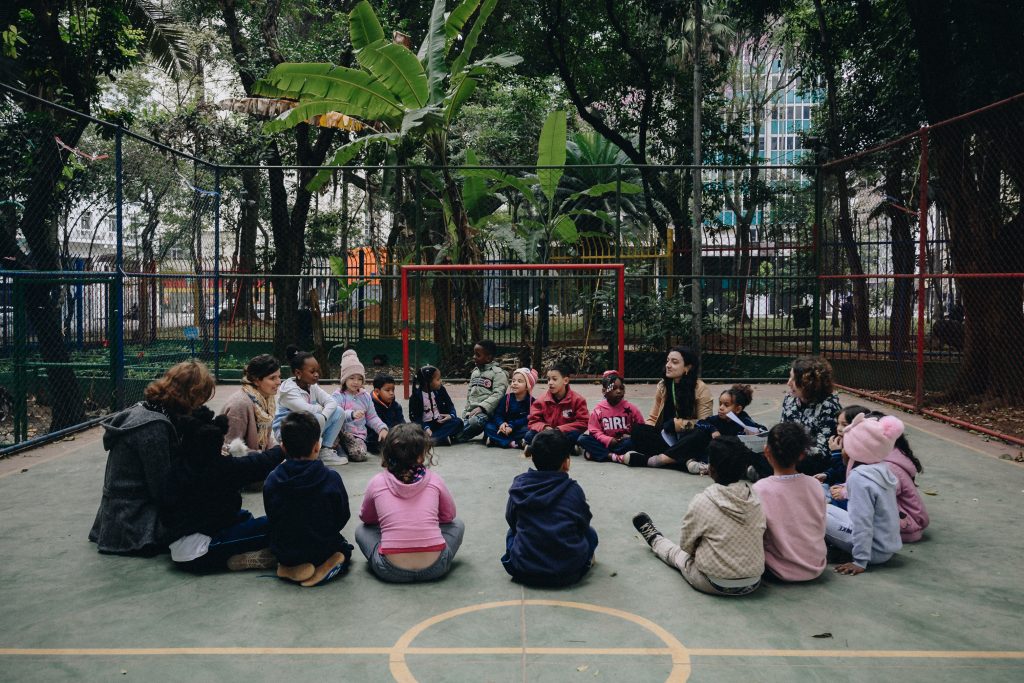
The Armando de Arruda Pereira Municipal School of Early Childhood Education (EMEI) is located in central São Paulo, in an area of high urban density, heavy vehicle traffic, limited availability of safe play spaces, and socio-environmental challenges that directly affect children’s health. In the city of São Paulo, the Municipal Health Department, through the VIGIAR Program, published in July 2025, recognizes air pollution as a relevant environmental risk factor for the population’s health, especially in monitoring respiratory diseases in children under five. The program conducts surveillance of conditions such as acute respiratory infections, asthma, and bronchitis in this age group, considered more susceptible to the effects of air pollutants. This risk is particularly relevant in São Paulo, where more than 2 million cars circulate daily and where fine particulate matter, more harmful to health, is strongly linked to vehicle emissions in the Metropolitan Region, according to CETESB. In the case of the EMEI, there are also concrete social vulnerabilities: in 2024, the school served around 200 children aged 4 to 5, from 20 nationalities, with high turnover associated with families in temporary social housing, in addition to facing safety challenges and critical use of public space around Praça da República. In this context, the playground revitalization gains strategic relevance, as improving green areas and naturalized spaces can help reduce exposure to heat, noise, and pollutants; encourage physical activity, social interaction, and well-being; and promote mental health, in line with World Health Organization (WHO) guidance for urban environments. Thus, the project is not limited to improving school infrastructure, but is part of a broader agenda to promote children’s health, climate adaptation, and the strengthening of a safer, more inclusive, and healthier territory for young children.
Project objective
Improve the outdoor space at EMEI Armando de Arruda Pereira through the renovation and revitalization of its playground, transforming it into a safer, more inclusive, sustainable environment that is better suited to children’s holistic development. The strategy, initially linked to the Healthy Communities Program, seeks to support actions in territories and communities to promote a healthy childhood, especially in the face of climate change challenges. In the case of the EMEI, the project is based on listening to the children themselves and the school community to redesign the space in line with naturalized park guidelines, valuing free play, contact with elements of nature, imagination, movement, social interaction, and a sense of belonging.
Partners
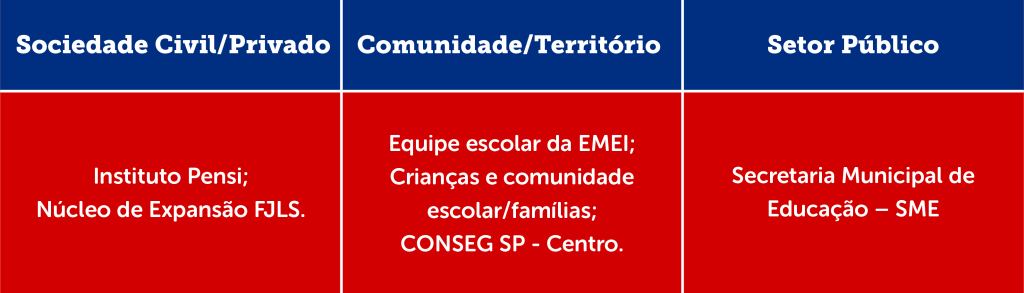
Dialogue with public policies
The project предусматри dialogue with public authorities, especially because it is an intervention in a municipal school and depends on institutional approvals for its implementation. The documentation indicates that a meeting was held with representatives of the Municipal Department of Education (SME) to present, detail, and move forward with approval of the project, in addition to the participation of the school team in the diagnosis and in the listening process carried out with the children. The support aligns with existing policies and guidelines related to early childhood education, the right to play, children’s participation, health promotion, and the improvement of school spaces, but there is no indication that its direct objective is to advocate for the creation of new laws; its focus is more on building a practical collaborative arrangement among the social organization, the school, the territory, and public authorities to enable the revitalization of the playground as a safe, inclusive, naturalized space that promotes child development.