





About the organization
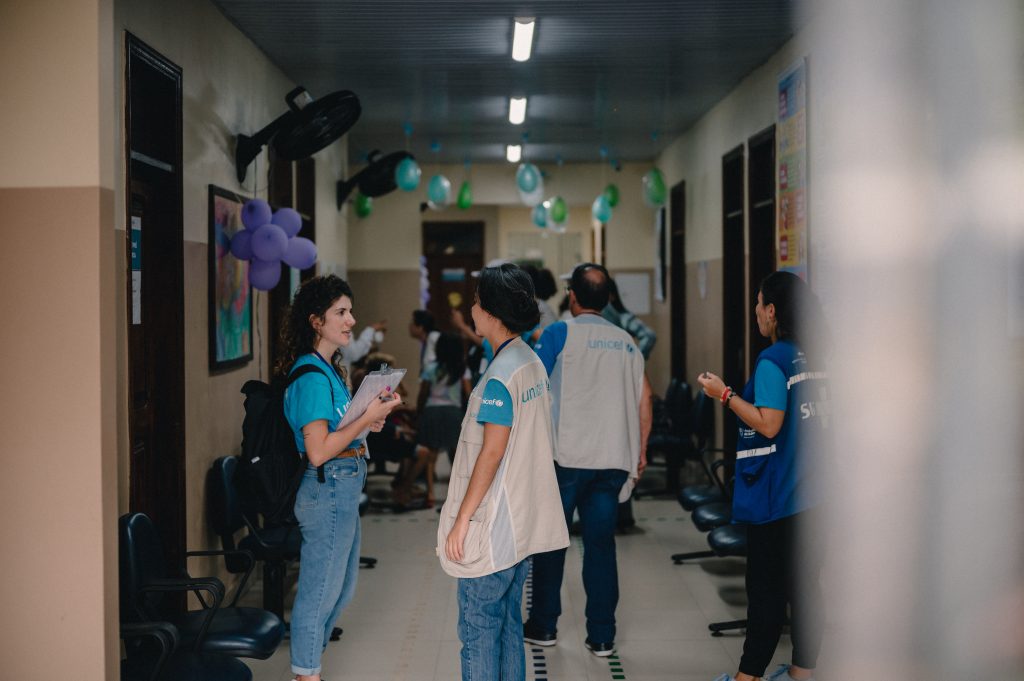
UNICEF is the United Nations Children’s Fund, responsible for promoting and protecting the rights of children and adolescents so that they can reach their full potential; it operates in more than 190 countries and focuses its work on structuring fronts such as health, nutrition, education, protection against violence, social protection and response in contexts of vulnerability, with a focus on reducing inequalities and expanding access to essential services. Among UNICEF’s different areas of work in Health in Brazil, we highlight the strengthening of fronts related to immunization, Indigenous health, comprehensive adolescent health, as well as the cross-cutting area of evidence generation.
Socioeconomic context
In the Legal Amazon, strengthening energy infrastructure and basic health services in remote areas is part of a context of territorial isolation and persistent inequality: the federal planning for Isolated Systems for 2025 estimates nearly 2 million people served in 160 localities without connection to the National Interconnected System, which highlights the reliance on local, continuous energy solutions. Recent IBGE data show that some of these areas concentrate critical social indicators — the Purus River Valley (AM), for example, recorded 66.6% of the population below the poverty line in 2023, and Macapá had only 33.6% with adequate access to sanitation. In this scenario, the Ministry of Health classifies as remote areas those that may require more than five days of travel or go more than six months without a visit from teams, and the PNI Cold Chain itself highlights that the proper preservation of immunobiologicals depends on stable temperature conditions, which are vulnerable to failures in the electricity supply.
Project objective
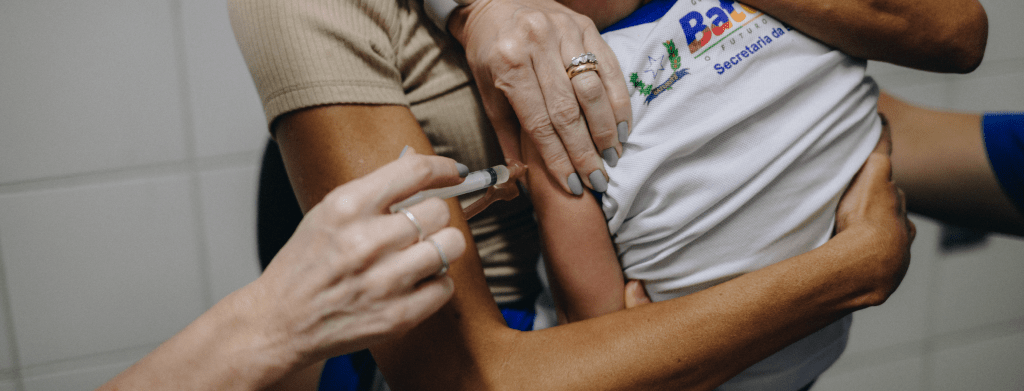
To ensure regular electricity from solar sources in primary health care units in isolated communities in the Amazon to sustain the provision of basic health services, especially the preservation, distribution and storage of immunobiologicals; in practice, the intention is to provide greater operational continuity for the units, reduce infrastructure vulnerabilities in remote areas, support stock and vaccination management, and leave installed capacity for long-term operation and maintenance.
Partners
| Civil Society/Private Sector |
| Saúde e Alegria Project |
Dialogue with public policies
Implementation takes place within the framework of UNICEF’s cooperation with the government, depends on government consent and other implementing partners, and connects to existing public health policies and arrangements, such as the National Vaccination Program in Public Schools, Digital SUS, the sectoral plan for adaptation to climate change and the structure of the PNI Cold Chain.