






About the organization
The Human Project (THP) operates from the understanding that human development happens in an integrated way and requires the simultaneous strengthening of different dimensions of community life. Through actions that connect education, health, culture, entrepreneurship, and community development, THP seeks to promote sustainable transformations, expanding opportunities and strengthening individual and collective capacities.
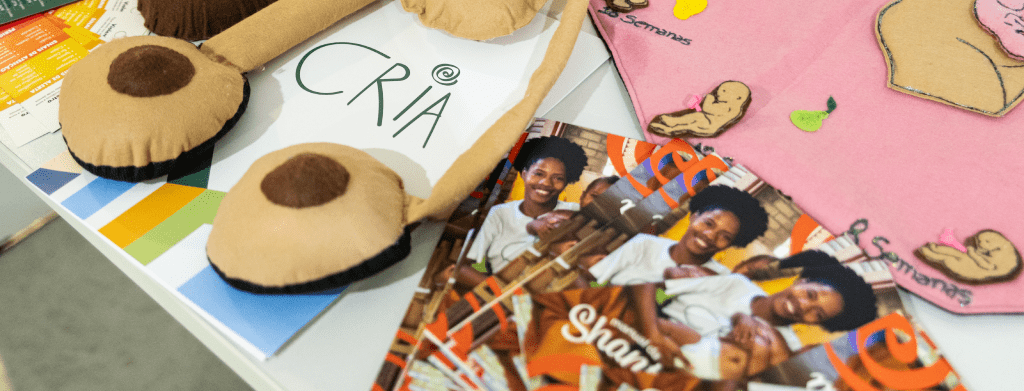
In this context, CRIA emerges, conceived as a Social Technology focused on early childhood, with the aim of supporting pregnant women, families, and children from the preconception period through the first years of life. The initiative seeks to strengthen care networks, promote holistic child development, and expand the conditions for children in situations of social vulnerability to access opportunities that contribute to their healthy and full development.
Socioeconomic context
The CRIA social technology is developed in the village of Pedra Furada, in the municipality of Santa Luzia do Itanhy, in southern Sergipe, a territory marked by high socioeconomic vulnerability. According to data from the 2022 Census, the municipality has around 13,616 inhabitants, and approximately 78% of the population lives in rural areas, with an economy based mainly on artisanal fishing and subsistence agriculture. Notably, around 34.2% of the population is under 19 years of age. In the same context, the most recent available municipal data indicate an infant mortality rate of 20.73 deaths per 1,000 live births (2023), higher than the recent national average, and records of teen pregnancy among those aged 10 to 19 at around 17.6%, based on SINASC/DATASUS data (2022). Local indicators point to high levels of poverty, with around 59% of the population receiving Bolsa Família and an average income below R$ 6.00 per person per day. Assessments carried out by IPTI/The Human Project in Santa Luzia do Itanhy, in the context of the Synapse social technology, also identified factors that impact child development, such as unplanned pregnancy, financial stress, and family conflicts, in addition to low levels of school performance. This set of factors creates the need for initiatives aimed at strengthening families and promoting healthy early childhood development.
Project objective
To build a social technology that promotes adequate conditions for motherhood and fatherhood in early childhood, in partnership with the Pedra Furada community. The initiative seeks to address challenges such as teen pregnancy, lack of support for families, and food insecurity through integrated actions that include monitoring of pregnant women and children, educational activities on child development and healthy eating, combating gender-based violence, and income-generation initiatives for women in the community and the sustainability of the CRIA space. Through peer education and youth leadership, CRIA youth play a central role in implementing the proposed actions. In addition to directly serving the local population, CRIA also aims to build an operating model that can be replicated in other villages in the municipality.
Partners
| Public Sector | Civil Society/Private Sector | Community/Territory |
| Santa Luzia do Itanhy City Hall Primeira Infância no SUAS/Crianças Feliz Program (Federal Government/municipal management) Government of the State of Sergipe – Secretariat for Economic Development and Science and Technology (SEDETEC) | Beja Institute, Mahle Institute, Raia, Valsa Group, A.MAR Project; Other social technologies, such as NHAM and Synapse Ei Drogasil and Fleury Group (2025) | EMEF Vereador Ribeiro Soutelo Pedra Furada community CRIA youth Families, caregivers, and children served Older adults served |
Dialogue with public policies
CRIA develops actions aligned with existing policies in the areas of health, education, and social assistance focused on early childhood, carrying out, among others, monitoring of pregnant women and children, support for breastfeeding, and community training on topics related to child development. CRIA is included as a strategy in the Santa Luzia Municipal Early Childhood Plan, demonstrating alignment and coordination with local public policies. In a context of fragile access to public services, the social technology has also sought to find ways to expand access to health care via telemedicine, in coordination with the territory’s health policies and facilities. By developing and testing a set of methodologies, practices, and tools for monitoring pregnant women, families, and children from before pregnancy through the first years of life, CRIA seeks to contribute to improving public policies and services focused on child development and support for families in contexts of vulnerability, with a particularly strong partnership with the municipality’s Primeira Infância no SUAS/Criança Feliz Program.