





About the organization
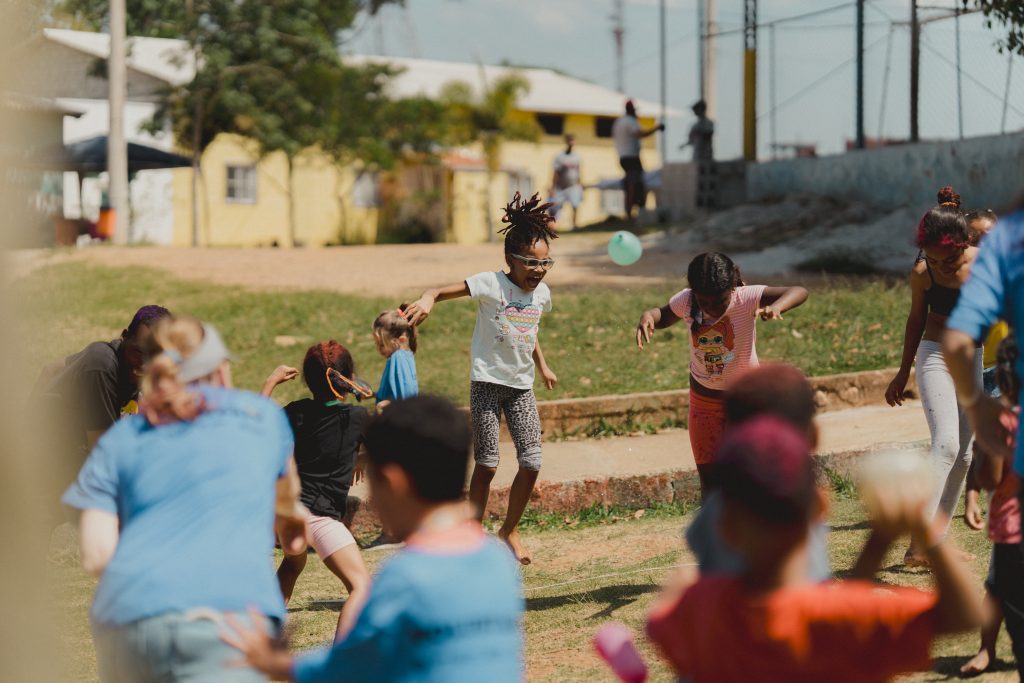
The Instituto Anchieta Grajaú is a civil society organization based in São Paulo that works with families, children, and adolescents in vulnerable contexts, combining education, social inclusion, and socio-environmental management within the territory. Its work brings together training, community care, and the qualified use of institutional spaces to strengthen bonds, expand local opportunities, and promote well-being, environmental regeneration, and sustainable development based on direct work with the community. The Institute’s space features various public facilities serving the local population, such as the Early Childhood Education Center (CEI), the Children and Adolescents Center (CCA), the Youth Center (CJ), and the Family Social Assistance Service (SASF).
Socioeconomic context
In a predominantly urban country, with 87.4% of the population living in urban areas in 2022, and in a metropolis the size of São Paulo, which is home to 11.45 million inhabitants, agendas for social inclusion, socio-environmental management, and environmental regeneration become central because territorial inequality, pressure on infrastructure, and climate exposure overlap, especially in the outskirts; in Brazil, 40 million children and adolescents already live exposed to more than one climate or environmental risk, which reinforces the need for solutions that coordinate environmental protection, community care, and the promotion of well-being.
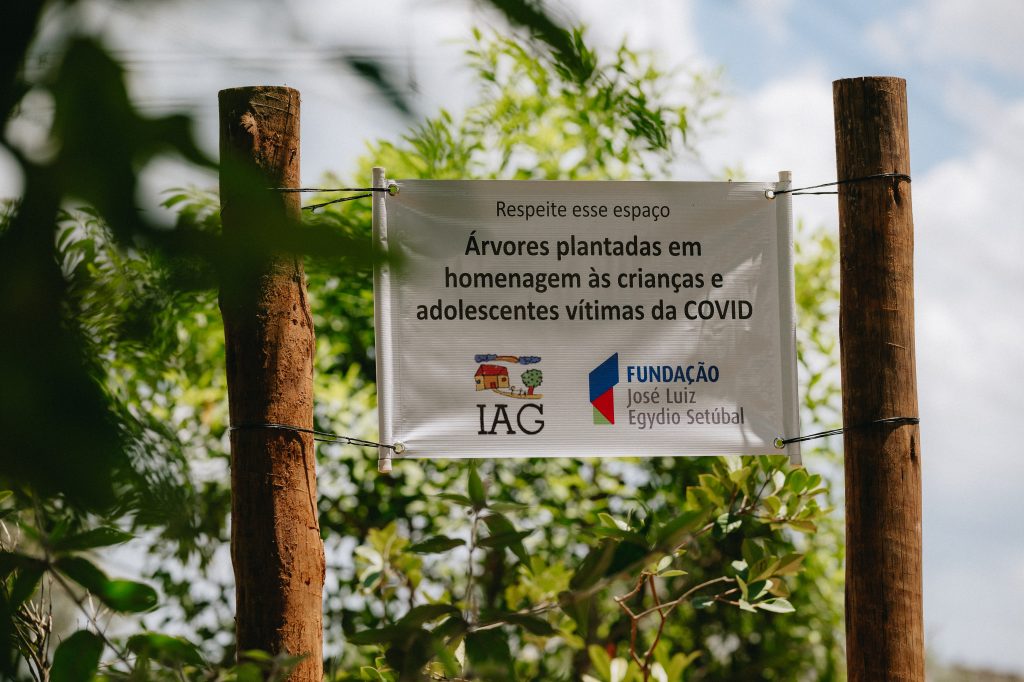
Project objective
In October 2022, the IAG-FJLES Orchard was created as a living memorial for children and adolescent victims of COVID-19, with more than 4,900 tree saplings planted in the context of the José Luiz Setúbal Foundation (FJLS) Fantastic Journey. From then on, FJLS began to support the management and maintenance of the orchard.
Thus, the project’s objective is to ensure the continuity of care for the green area already established, preserving the planted trees, reducing losses due to lack of water, vandalism, and pests, and sustaining a space that combines memory, environmental regeneration, and social impact in the territory. In practice, this means maintaining irrigation, fertilization, pruning, weeding, monitoring the health of the saplings, replacing losses, and making support improvements to guarantee the longevity of the orchard, soil recovery, regeneration of native vegetation, and the environmental enhancement of the space with efficient use of resources and the generation of more lasting local benefits.
Partners
| Civil society/Private | Community/territory |
| Knorr Bremse Global Care; Mahle Project; Global Shapers | Volunteers; Children, youth, and adolescents served; Community; local helpers/workers from the surrounding area |
Dialogues with Public Policies
There is no explicit provision for institutional dialogue with public authorities, the formulation of new laws, or the construction of public service arrangements; the presented design is centered on territorial execution, direct management, monitoring, and community mobilization. There is, at most, an indirect relationship with existing policies and the local urban context, as the territory is interpreted in light of themes such as land regularization, urbanization, the existence of public facilities on-site, and municipal guidelines, but this appears as a contextual reference rather than a formal public advocacy strategy.