






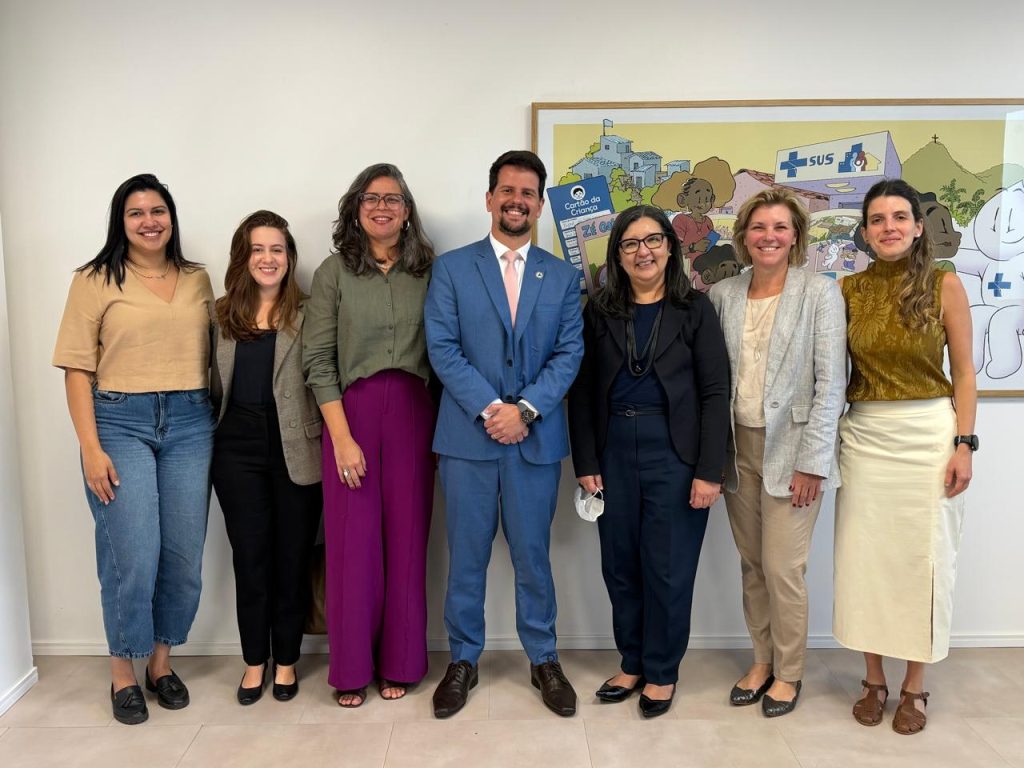
On August 18, Infinis – Instituto Futuro é Infância Saudável visited the Ministry of Health in Brasília for a meeting dedicated to strengthening public policies for the prevention of violence against children and adolescents, focusing on the strategic role of health.
During the meeting, Infinis presented preliminary results of the research “Attitudes and Perceptions about Childhood and Violence against Children and Adolescents” to the Deputy Secretary of the Primary Health Care Secretariat, Ilano Barreto; to the Child Health Coordinator, Sônia Venâncio; and to the Adolescent Health Coordinator, Bruna Nunes. General Coordination of Child and Adolescent Health Care
Conducted in partnership with Quaest, the survey seeks to understand how the Brazilian population perceives different forms of violence against children and adolescents, in addition to identifying behaviors, beliefs, and attitudes in these situations. Among the results, the research highlights contradictions between valuing dialogue as a way of educating and the persistence of violent practices in daily life.
The presentation of the data opened a space for the exchange of perspectives on how evidence can contribute to improving prevention strategies and inform public policies aimed at the protection and health of children and adolescents.
A technical meeting was also held with the Child and Adolescent Health Coordination to advance the dialogue regarding a Technical Cooperation Agreement between Infinis and the Ministry of Health, focusing on the role of health in the prevention of violence against children and adolescents.
Health services occupy a strategic position in this agenda as they are among the spaces capable of identifying signs of violence, supporting children, adolescents, and their families, and coordinating responses with other sectors of the protection network. Strengthening protocols, evidence, and tools that support the work of professionals is, therefore, a fundamental part of strategies to prevent and combat violence.
The agenda in Brasília reinforces the role of Infinis in coordinating with public authorities and in the support and dissemination of evidence capable of contributing to public policies that guarantee the right of children and adolescents to grow and develop in a healthy and protected manner.