






Understanding how society perceives violence against children and adolescents is a fundamental step in addressing a problem that often remains invisible precisely because it is normalized. It is with this objective that Infinis launched the second edition of the survey Attitudes and perceptions about childhood and violence against children and adolescents in Brazil, conducted in partnership with Quaest.
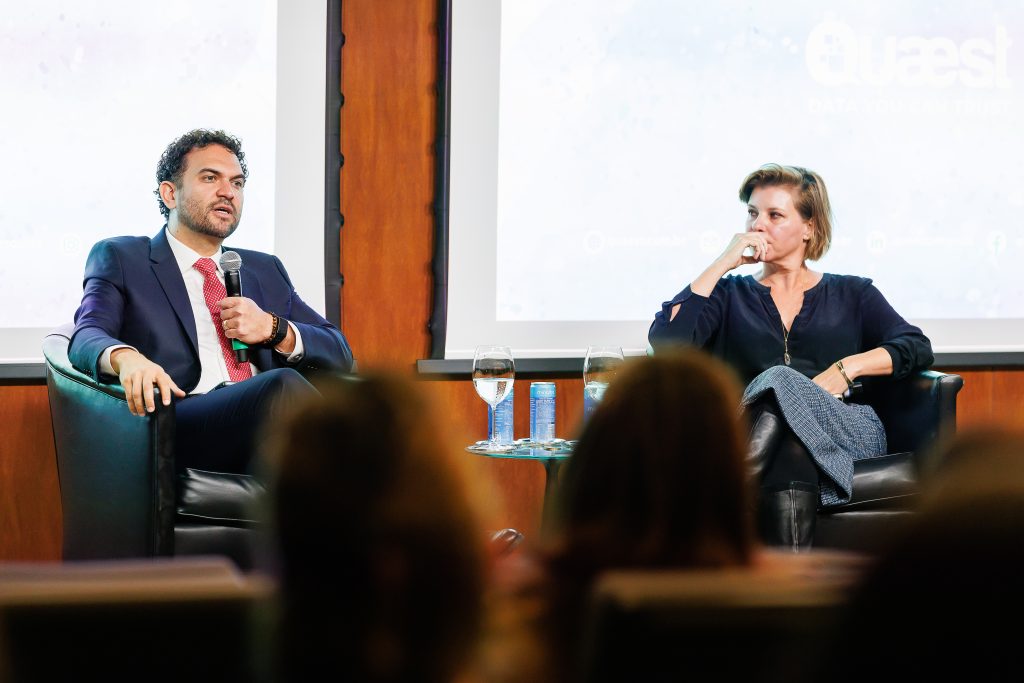
The launch event, which took place at the Itaúsa Auditorium on July 14, brought together civil society leaders, researchers, and specialists working on the violence prevention agenda. The presentation was led by Márcia Kalvon, Executive Director of Infinis, and Felipe Nunes, CEO of Quaest, who shared the study’s main findings and reflected on the role of evidence in building public policies for the prevention of violence against children and adolescents.
Understanding how the population thinks and reacts when we talk about violence against children and adolescents is fundamental for us to reflect on how we, as a private foundation, can contribute to qualifying this public debate. – stated Márcia Kalvon.
What the data shows
Conducted with 2,202 Brazilians from all regions of the country, the survey sought to understand how society perceives childhood, adolescence, violence, and ways of educating children. More than measuring opinions, the study investigates how experiences lived throughout life shape behaviors and social values that remain present in Brazilian society.
The results show that there is a consensus around the importance of dialogue and care, but also reveal a concerning coexistence with practices that constitute violence.
Although 91% of Brazilians consider that talking is the ideal way to educate, there is still a significant portion that considers behaviors such as shouting, threatening to hit, or using physical punishment acceptable in certain situations. In reality, many acknowledge having resorted precisely to these practices.
Another striking finding is the population’s difficulty in intervening in public situations of violence. For 62% of respondents, the most likely reaction to witnessing a child being hit or having their ear pulled on the street is not to get involved. Among the main reasons cited are the perception that “everyone should mind their own business” and the embarrassment of interfering in how other families educate their children. The finding reinforces that, despite advances in awareness about violence against children and adolescents, many of these situations are still treated as a private matter, weakening collective responsibility in addressing violence.
The cycle of violence
The study also shows that violence can be perpetuated across generations. People who experienced punitive practices during childhood tend, on average, to accept and reproduce more rigid forms of education as adults. At the same time, the survey shows that this trajectory is not inevitable: many break this cycle, reinforcing the importance of public policies, family support, and care strategies that promote healthier and more protective relationships.
By gathering new evidence, the survey expands understanding of the challenges of violence prevention and offers support to qualify public debate, strengthen civil society organizations, and support the formulation of policies aimed at guaranteeing the rights of children and adolescents.
- The study’s findings will be explored in depth during the 8th Public Health Policies Forum for Childhood, which takes place on September 30 and will bring together specialists, public administrators, and civil society representatives to discuss pathways for building safer, healthier, and more protected childhoods.