






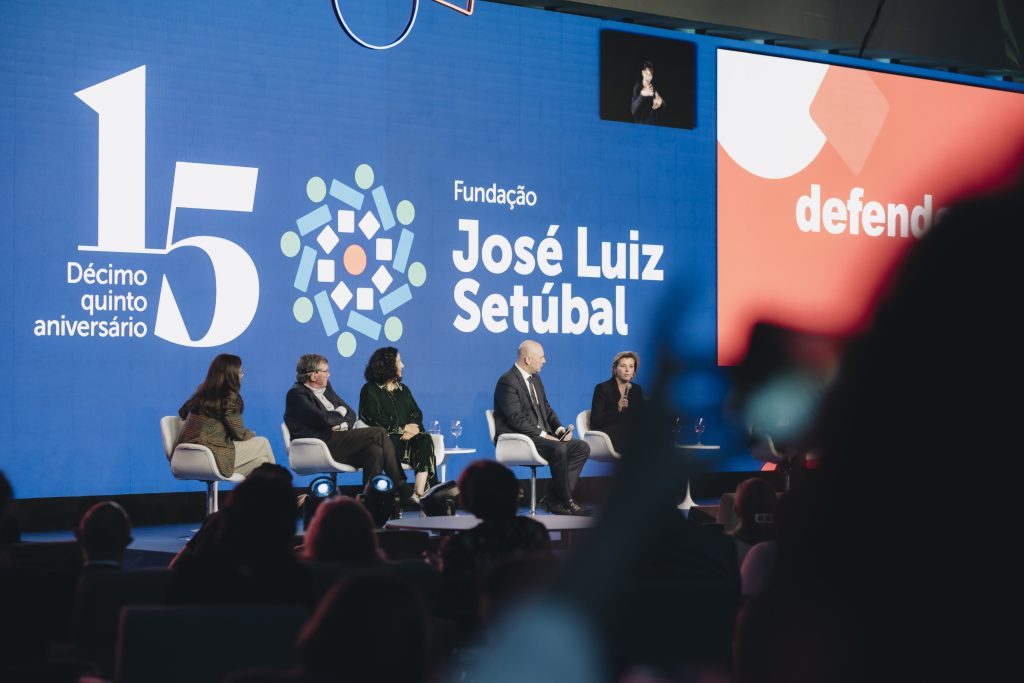
Infinis – Instituto Futuro é Infância Saudável, a nonprofit organization, was launched on June 10, 2025 with the purpose of advocating for public health for children and adolescents and strengthening civil society in Brazil. The institute is the result of the strategic evolution of the José Luiz Setúbal Foundation and is already born with a legacy, integrating a robust child health system, also formed by Sabará Children’s Hospital and Instituto Pensi. The executive direction of Infinis is led by Marcia Kalvon, who was, until then, Director of Advocacy and Philanthropy at the José Luiz Setúbal Foundation.
“The José Luiz Setúbal Foundation is conceived as a large umbrella for the institutions, which function as a system,” said Dr. José Luiz Setúbal, president of the Foundation. “This system works with Sabará providing the care, the heart of the institution. Pensi would be the brain, not only training people but also thinking through its researchers. And finally Infinis, which would be the voice of the Foundation, responsible for all advocacy work. It is the defense of childhood in Brazil, an area greatly neglected due to a series of factors. Bringing these three institutions together under the Foundation’s umbrella, which would be the soul.”
Infinis’ Work
Infinis will work primarily on the following thematic areas: food and nutritional security, mental health and violence prevention, all related to children and adolescents, in addition to strengthening civil society. The institute’s distinguishing feature lies in the integration of science, policy advocacy and philanthropy promotion, always with a focus on direct and participatory engagement of communities in its actions, prioritizing the active involvement of children and adolescents.
“What we learned in these five years incubated in the Foundation, before Infinis came into the world, is that we have in the country the necessary laws to ensure a healthy childhood, from article 227 of our Constitution, through the Child and Adolescent Statute, the Unified Health System and the Unified Social Assistance System. The question is how to ensure that they are, in fact, delivered to the population and to children,” stated Marcia Kalvon, executive director of Infinis. “The difference between a healthy and vulnerable childhood is our ability to influence public policies and care that can provide full development.”
Project Support and Advocacy
This year, Infinis will invest R$10 million in priority areas of child health, supporting initiatives that seek to develop and test social technologies in communities primarily in the North and Northeast regions of Brazil, in addition to influencing and strengthening public policies. In its purpose of stimulating philanthropy and the culture of donation in the country, Infinis will invest R$1.5 million in 2025 supporting third sector infrastructure organizations, as well as movements and alliances that seek to promote a legal, fiscal and cultural environment favorable to donations and the work of civil society organizations.